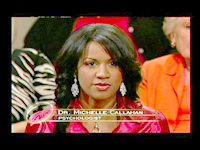
Dr. Michelle on Today discussing Surviving Divorce

Events, News and EventsNo Comments »

Dr. Michelle joined Kathie Lee and Hoda to give tips on how to move forward after a divorce.

Right Way to Disagree Can Be Good for Relationships

BlogNo Comments »

The Wall Street Journal

Fighting Happily Ever After

By ELIZABETH BERNSTEIN

If you fought with your sweetheart last night, does that mean that your relationship is on the rocks?

Maybe. Maybe not.

Couples are more likely to divorce if they exhibit negative behavior during a conflict before they get married. WSJ’s Bonds columnist Elizabeth Bernstein provides you with tips on how to fight better, which psychologists say can save your marriage.

Research shows it’s how we fight—where, when, what tone of voice and words we use, whether we hear each other out fairly—that’s critical. If we argue poorly, we may end up headed for divorce court. Yet if we argue well, experts say, we actually may improve our relationship.

Esther and Bill Bleuel learned to change the way they fight. A few years ago, they had a serious spat while driving down Interstate 5 in California. The topic was a sore one: His adult daughters from his first marriage. Ms. Bleuel felt her husband paid more attention to them than to her.

Suddenly, Ms. Bleuel, who was driving, saw red lights flashing behind her. Glancing quickly at her speedometer, she realized she was traveling 96 miles per hour in a 65 mph zone. She pulled over, and a policeman approached the car. Before she had a chance to speak, though, her husband said: “Officer, it is my fault. I was arguing with my wife and she got upset.”

Ms. Bleuel, a 64-year-old psychotherapist from Westlake Village, Calif., says that the policeman looked stunned, then replied: “Oh boy, I know what it’s like—I’m married, too. But please, in the future, try to go easy on her.”

It’s great advice for everyone, right? But how do we do it? How can we learn to keep our cool when we’re upset? How long should we let a disagreement go on? Is there always a “winner”?

“All couples disagree—it’s how they disagree that makes the difference,” says Howard Markman, professor of psychology at the University of Denver and co-director of the Center for Marital and Family Studies. For 30 years, Dr. Markman has conducted research that looks at how couples deal with conflict. A key finding: Couples who argue well are happier. Or, as Dr. Markman says, “You can get angry, but it’s important to talk without fighting.”

Tough love: Why some marriages thrive on conflict

Blog1 Comment »

Expert: Couples with major issues may benefit from lowered expectations

by Rachael Rettner

While a successful marriage is not an exact science, science (and common sense) suggests thinking and behaving in a positive way toward one’s partner is beneficial. However, one psychologist proposes that for some couples, negative thoughts and actions may actually be better in the long run.

For couples who experience frequent, serious problems, such negative behavior as placing blame on one’s spouse, commanding him or her to change, and being less forgiving seem to be the best way to breed a happy marriage.

Such advice seems counterintuitive, but James McNulty, a psychologist at the University of Tennessee, says what works for happy couples may not work for those with more problems.

“Happy couples do behave certain ways and think more positively, but this might not be creating their happiness necessarily, it may just reflect their happiness,” McNulty said. “Because when unhappy couples behave and think the same way, over time they actually seem to get worse.”

His recent research suggests marital therapies that encourage couples with major issues to be more critical of one another are potentially beneficial.

McNulty’s theory is based on four studies conducted over the past decade.

In the first, 82 newlywed couples were asked to report eight times over the course of four years on how satisfied they were with their marriage.

The power of low expectations
The couples had been asked at the beginning of their marriage whether they expected to grow stronger in their relationship or to experience rough patches along the way.

The results, published in 2004, showed that having positive expectations about the relationship helped only if the couples met these expectations, McNulty said. Couples with more problems did better if they had expected to encounter obstacles.

Read more…

Couples and Clutter

BlogNo Comments »

Relationship expert Dr. Michelle Callahan shares advice on how to eliminate clutter from your home and your relationship.

Whether you realize it or not, clutter causes stress and can put a strain on your relationship with your spouse and children, relationship expert Dr. Michelle Callahan says. “Clutter robs your home of peaceful and romantic energy and instead fills it with disorganization and anxiety,” she says. Dr. Callahan offers advice on how to get rid of clutter in your home and relationships.

Your bedroom is meant to bring feelings of relaxation and romance, Dr. Callahan says. “If an item isn’t contributing to those feelings, move it or lose it,” she says. Make sure all items are in their necessary places and not creating a mess in your bedroom. “Keep the kids’ things in their own rooms, and use an organization system to keep your personal items stored out of sight,” Dr. Callahan says.

When you and your spouse create a vision for how you want your home to look, you are more likely to work toward achieving that ideal and less likely to accumulate clutter that’s not part of the vision, Dr. Callahan says. “The clutter won’t go away unless you both have a unified goal of a clutter-free home,” she says.

Regardless of who’s creating the clutter, it affects both spouses, Dr. Callahan says. “The items that become clutter are usually purchased with money that belongs to your family, and clutter takes up space that the two of you share,” she says. “Talk to your spouse about the clutter in your home. Try to understand where it came from and develop a considerate, relationship-promoting solution to getting rid of your clutter.”

Establish a budget that will help you limit the purchases that create clutter. “Sometimes clutter is disorganization; other times it is overspending,” Dr. Callahan says. “Creating a family budget will help you realize when you are buying things that you don’t need and can’t afford.” She says you can increase your motivation to stick to the budget by making a list of the benefits of spending less money on your clutter collection and ask yourself, “What can my spouse and I do with the money saved?”

Read more…

Is Marriage Good for Your Health?

BlogNo Comments »

Is Marriage Good for Your Health?: What research shows about the connection between relationships and physical well-being.

In 1858, a British epidemiologist named William Farr set out to study what he called the “conjugal condition” of the people of France. He divided the adult population into three distinct categories: the “married,” consisting of husbands and wives; the “celibate,” defined as the bachelors and spinsters who had never married; and finally the “widowed,” those who had experienced the death of a spouse. Using birth, death and marriage records, Farr analyzed the relative mortality rates of the three groups at various ages. The work, a groundbreaking study that helped establish the field of medical statistics, showed that the unmarried died from disease “in undue proportion” to their married counterparts. And the widowed, Farr found, fared worst of all.

Farr’s was among the first scholarly works to suggest that there is a health advantage to marriage and to identify marital loss as a significant risk factor for poor health. Married people, the data seemed to show, lived longer, healthier lives. “Marriage is a healthy estate,” Farr concluded. “The single individual is more likely to be wrecked on his voyage than the lives joined together in matrimony.”

While Farr’s own study is no longer relevant to the social realities of today’s world — his three categories exclude couples living together, gay couples and the divorced, for instance — his overarching finding about the health benefits of marriage seems to have stood the test of time. Critics, of course, have rightly cautioned about the risk of conflating correlation with causation. (Better health among the married sometimes simply reflects the fact that healthy people are more likely to get married in the first place.) But in the 150 years since Farr’s work, scientists have continued to document the “marriage advantage”: the fact that married people, on average, appear to be healthier and live longer than unmarried people.

Contemporary studies, for instance, have shown that married people are less likely to get pneumonia, have surgery, develop cancer or have heart attacks. A group of Swedish researchers has found that being married or cohabiting at midlife is associated with a lower risk for dementia. A study of two dozen causes of death in the Netherlands found that in virtually every category, ranging from violent deaths like homicide and car accidents to certain forms of cancer, the unmarried were at far higher risk than the married. For many years, studies like these have influenced both politics and policy, fueling national marriage-promotion efforts, like the Healthy Marriage Initiative of the U.S. Department of Health and Human Services. From 2006 to 2010, the program received $150 million annually to spend on projects like “divorce reduction” efforts and often cited the health benefits of marrying and staying married.

Read more…

..